

Drunk Douchebag Takes on Joe Biden–and the Secret Service!

The following excerpt is from Chapter 12 (Reading the Room: The Wisdom of Quiet Self-Preservation) of the forthcoming book by HangoverHeadlines.com Editor-in-Chief Chris Benson—Reporting from Detox: A Journalist’s Guide to America’s Addiction and Mental Health Crisis—and the Power of Community to Transform.
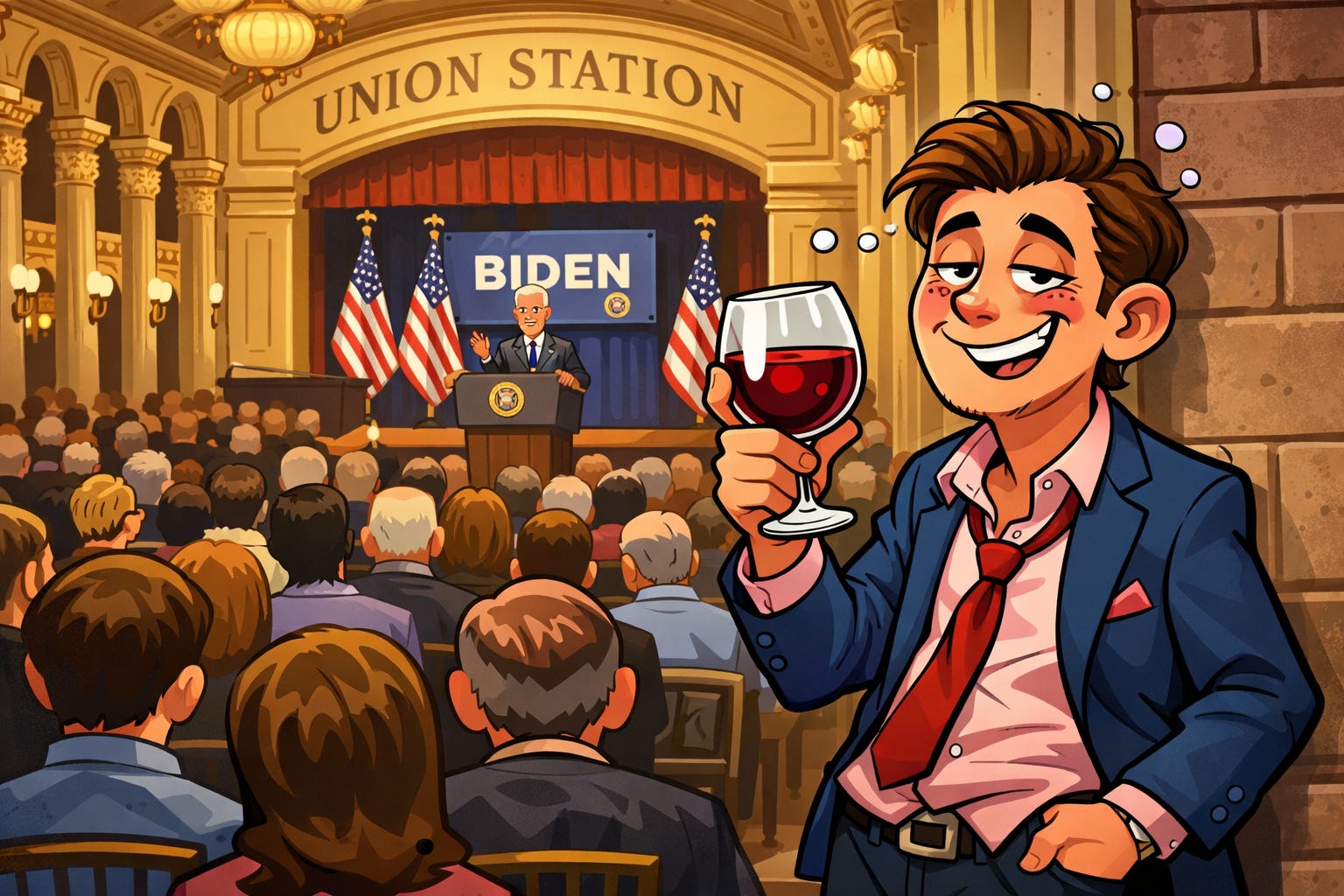
The U.S. Secret Service does not typically detain drunk people. But on January 3, 2013, they came close to having to make an exception—because of me. Getting drunk and heckling Joe Biden isn’t exactly a moment I’m proud of, but I have to admit—it made for a great story. “My ability to read the room,” I often joke now, “is the reason why I stay home a lot.” But back then—inebriated in the magnificent marble halls of Union Station in the nation’s capital, a glass of wine in hand and the Vice President of the United States at the podium—the only thing I was reading was my own ego.
It was a celebration of the 113th Congress, a ceremonial swearing‑in for the largest class of Hispanic lawmakers ever elected. I was already half-drunk when we arrived, even more titillated by the prospect of our debaucherous night ahead to explore gay bars in pre-Trump D.C. The event was elegant, a divine cliche affair by Washington standards: Biden presiding, cabinet secretaries mingling, fancy wine flowing like a river, fine tuxedos and pretty outfits in a sea of smiling faces. But we had no reason to be there. My friend and I had, quite literally, talked our way into an event we were never invited to.
My friend was in the nation’s capital—whether for his Senate internship or something else, I can’t quite recall after more than a decade’s memory damaged by alcohol. We were always scheming something mischievous—never harmful, just well-intended fun that usually involved booze. “So, hear me out…” he began, as he had so many times before the night took over. He told me about a political event with Biden and the Hispanic House members being sworn in by the Vice President, persuasively reasoning that we ought to be there—even though we clearly had no business being anywhere near it. I found it difficult to disagree with his logic.
We smoothed our collars, left the hotel near DuPont and made our way into the heart of the district as I magically bluffed our way past security and the velvet rope and into a room filled with history in motion. At first it was exhilarating. I spotted House Minority Whip Steny Hoyer, of Maryland, as we entered and eagerly yelled his name as he and an aide walked by. “Heyyy, Steennny!!!” I bellowed like we were old college buddies. He gave me a polite, awkward smile, a wave and a nod, maybe thinking I was a colleague’s overeager staffer. For a moment, I felt electric. But that was the last “warm reception” I got all night. Because then the drinking took command. And alcohol, for me, was always both the spark and the trigger.
Blackout haze floats over the rest. Cabinet secretaries—Ken Salazar, Hilda Solis—blur through my mind. The speed and efficiency of the wine line was too mesmerizing. New Jersey’s then-Senator Bob Menendez too, notorious in his own right, caught somewhere in the haze of my trash-talking from the sidelines as I contemplated him as my verbal victim years before his conviction. What possessed me? Some combination of cheap arrogance, free booze, and the intoxicated belief that I could say and do whatever I wanted because I was young, untouchable, and drunk enough to mistake volume for wit.
Then-Vice President Joe Biden was speaking to a packed room, delivering remarks about the historic moment for the Hispanic Caucus. Cameras flashed. Lawmakers leaned forward. I—alone in the back, wine glass three or four in hand—decided the best contribution I could make was yelling at the second‑highest official in the country. “Boring! Boring!!” I yelled at one point as Biden spoke and the wine truly took over. “Borrring!!!” I shouted again but only louder. “Who is this guy?!” I sarcastically added like a drunk prick—more than once. Even from my friend’s spot at the very front, he could hear me loud and clear—there’s no way Biden didn’t hear me verbally attack him. It was a moment that, arguably, could only have happened in the United States—I was America in all its drunken glory on full display.
But the sharpest moment I recall is trying to leave the room. In my clouded alcohol brain, I was done for the night with the future president—and ready for the gay bars. “You can’t leave until the Vice President is finished speaking,” the armed Secret Service agent sternly informed me at the door as I tried to exit, first out the wrong way. Drunk me, of course, decided to engage. “What?! I just want to leave,” I said in a cocky tone. Then, with the kind of arrogance that makes you cringe in hindsight, I added: “It’s not like I want to shoot the guy.”
The agent’s arms crossed, a large gun in hand and a heavy pistol at his hip. My dear friend lunged in before the floor—or other agents—swallowed me whole. He grabbed me, smiling nervously at the stern‑faced agent, and apologized. “He’s not sober,” my friend explained, dragging me toward discretion. “I’ve got him,” he told the federal agent—words he uttered more than once about me in my series of drunken escapades. The agent didn’t reply. He didn’t need to. His silence—and look—was louder than any warning.
That night could have ended in handcuffs. Instead, it ended in drunken banter. In recovery, I look back on that room and think about how alcohol rewired my social instincts. I drank to feel equipped, to build armor in places I felt raw or vulnerable. I used it to walk into rooms where I felt unequipped and inflate myself into someone bearable to me, but unbearable to everyone else. That night illustrates it perfectly: the wine convinced me I belonged among senators and cabinet secretaries that I could openly harass. Then it robbed me of dignity until I nearly belonged to the Secret Service in custody.
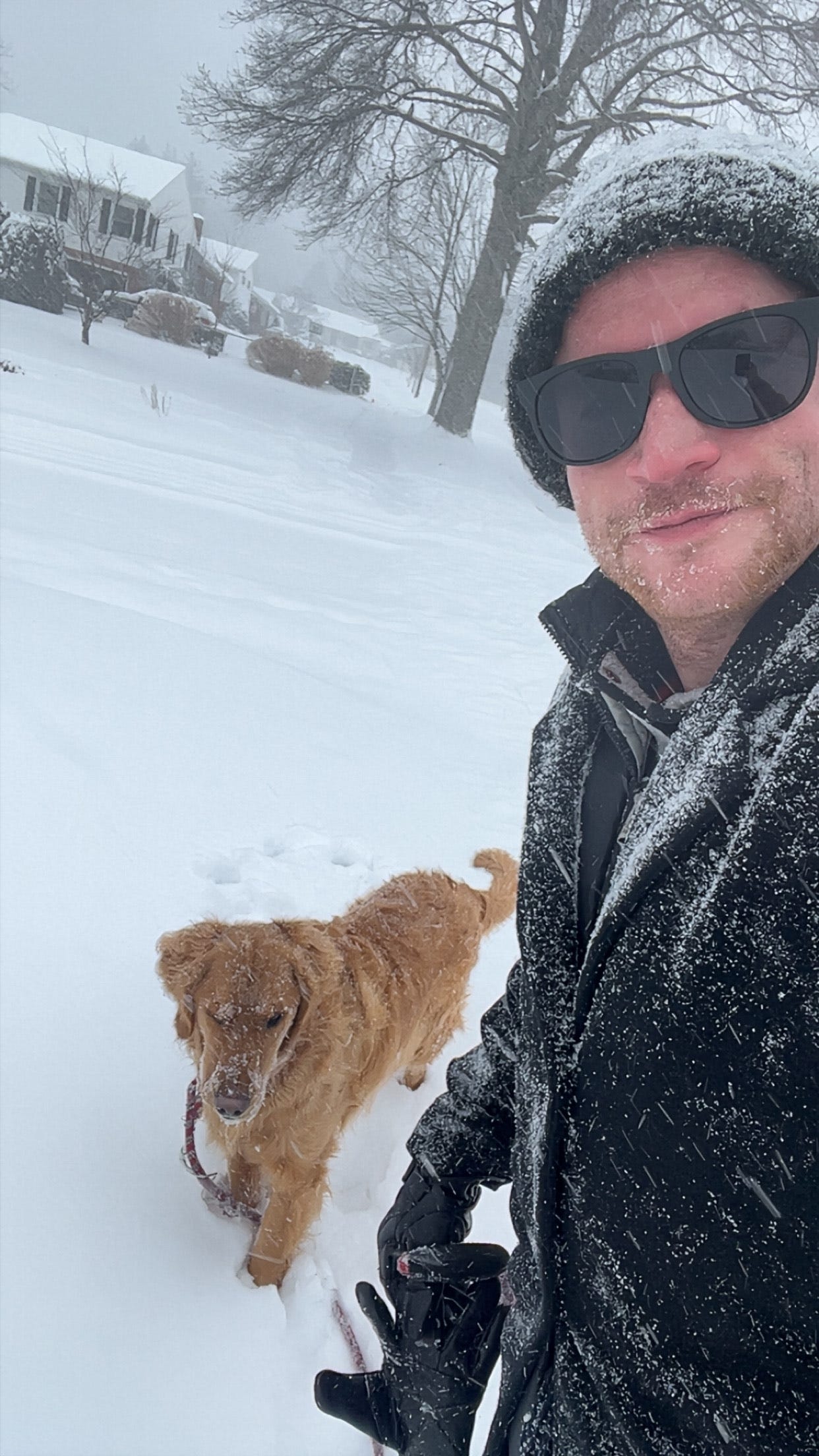
These days, sobriety gives me something alcohol never could: clarity. A sharper ability to really read the room. To see people as they are, not as my insecurity or intoxication wants them to be. And in that clarity, I’ve made peace with something most of us take too long to learn: I’m often better off at home. Alone. Quiet. A dog at my side instead of a wine glass in my hand.
Because the truth is this: your life, like mine, will never be something others can easily understand. No one else knows the fullness of your story, nor should you expect them to. You don’t owe the world comprehension. You owe it only to yourself to keep doing the work—day after day—to turn embarrassment into growth, and mistakes into something worth writing about. Though I still cringe at the memory of shouting down poor Joe Biden, I’d like to think that now, in my sober state, he’d laugh it off and forgive me—with the grace and good humor of the gentleman he is, in the way I was not to him that chilly, historic night in January 2013.
- Chris Benson, author of Reporting from Detox: A Journalist’s Guide to America’s Addiction and Mental Health Crisis—and the Power of Community to Transform, is the editor-in-chief of HangoverHeadlines.com.